Los Angeles has been the host of some of the largest concerts in the country. A stadium and an arena can sell thousands of tickets on a single evening. There is a smooth show behind which is planned out and detailed safety operation. A trained concert security guard Los Angeles knows very well how to protect the fans. This guide divides what it takes to keep fans safe.
Why Large Concerts Require Serious Security Planning
The Scale of a Modern Arena Show
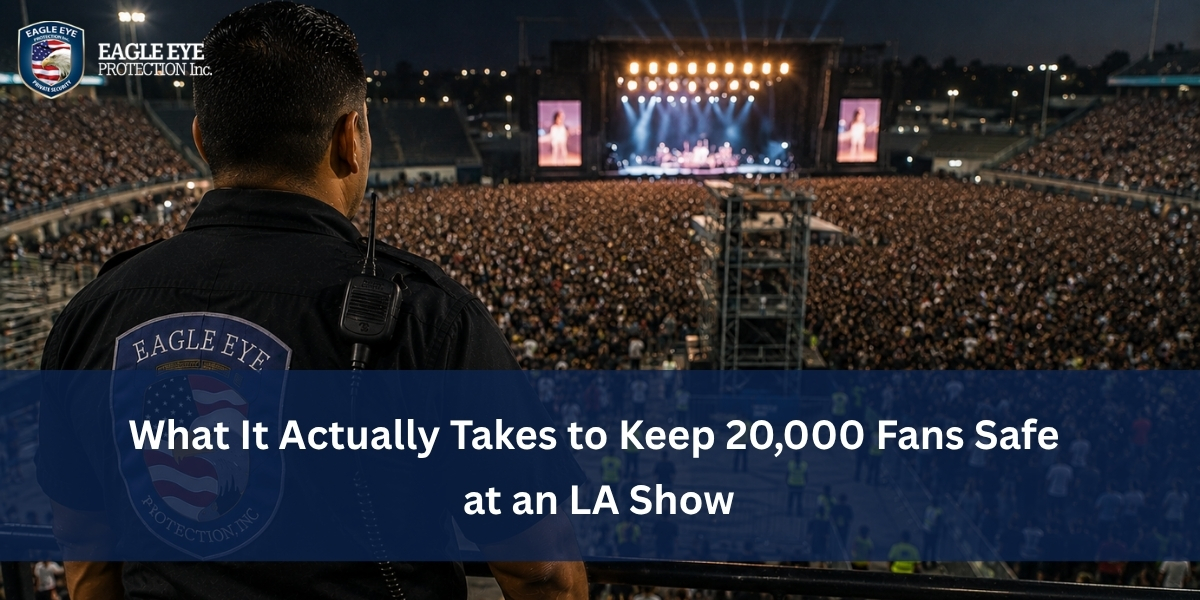
One night a 20,000-seat place makes a mini city. Mobs pass through the gates, corridors and seats simultaneously. In the meantime, artists, employees and sellers all require secure, regulated access as well. This scale implies that security planning begins weeks prior to the actual date of the event.
Risks That Come With Large Crowds
The big crowds also come with actual dangers, such as crushes at the stage or even medical crises. There is also an extra risk of alcohol service where there is a long evening show. Also, popular artists are at times the target of troublemakers. It takes more than a few guards to plan the risk of these.
The Role of a Concert Security Guard Los Angeles Team
Crowd Management as a Core Duty
The Los Angeles team of concert security guards pays much attention to crowd control during the night. Guards watch entry points, aisles and overall general admission floor area. They monitor congestion around stages and make adaptations on barriers as necessary. This constant focus will avoid dangerous crowd surges in moments of high energy.
Access Control at Every Level
Backstage access, VIP access, and staff access are also controlled by guards. These checkpoints must only be passed by credentialed persons. What is more, guards check the tickets and wristbands, in order to make sure that people access their seats correctly. This stratified control will ensure that unauthorized guests will not access the restricted areas at all.
Building the Security Plan Before Doors Open
Venue Walkthroughs and Risk Assessment
Security planning begins with a complete site survey of the whole area. Teams chart exits, choke points and overcrowding areas. This evaluation determines the positionings of guards during the night. As a result, there is greater coverage in high-risk zones as compared to low-traffic zones.
Coordinating With Venue and Artist Teams
Security staff also liaises with artists and venue staff. Every artist can come up with certain demands regarding backstage or side-stage security. Meanwhile, venue employees provide information on problem areas of previous performances.
Staffing Ratios for a 20,000-Person Show
How Many Guards a Show Actually Needs
Big concerts usually use dozens of guards in various areas. The number of staffing is based on the layout of the venue, popularity of the artists and the energy of the crowd. A standing room high-energy show may require a ratio of a tighter guard. In the meantime, seated performances with less rowdy audiences might require fewer guards.
Specialized Roles Within the Team
Not all guards play the same role in a big concert. Other guards are devoted to screening at entry and bag screening. The floor is monitored by others and a smaller team manages VIP areas. This specialization of labor ensures that each area in the show is adequately covered.
Entry Screening and Bag Checks
Why This Step Matters So Much
One of the most significant steps of safety, in general, is entry screening. Bags, wands, and items banned are inspected by the guards before the fans reach their seats. This is done to prevent the entry of weapons, alcohol or other prohibited goods. This is a step that can prevent entry lines, but this takes care of everybody within.
Balancing Speed With Thoroughness
Venues strive to strike the right balance between quick access and efficient, comprehensive screening. Trained guards are efficient and do not miss out on conducting key safety checks. This has led to fans having reduced wait times without affecting the overall safety. This balance requires practice, explicit training, and effective team communication.
Handling Medical Emergencies During a Show
First Responder Guards at the Scene.
In many cases, security guards arrive before paramedics do to a medical situation. Due to this, numerous guards are provided with basic first aid and CPR training. They will be able to stabilize a situation until trained medical staff will take the full charge. This rapid immediate reaction can prove to be a lifesaver in case of an emergency.
Coordinating With Onsite Medical Teams
Big events typically have medical teams onsite. Guards closely liaise with these teams to direct them in the crowded areas. Such coordination accelerates reaction times in a high-noise, chaotic environment. This process is maintained smoothly all through the night by clear communication channels.
Managing Alcohol-Related Incidents
Why Alcohol Adds Extra Risk
The alcohol service at concerts is an actual source of safety hazard. Drunken fans are likely to be rowdy or unsafe later into the night. Guards are on the lookout for the early signs of overserving around bars and lounges. In the meantime, employees collaborate to discontinue service when required.
De-Escalation Skills in Action
Guards use tone, body language and patience when there is conflict. This strategy prevents the development of incidents into something more serious.
Technology Supporting Modern Concert Security
Cameras, Radios, and Real-Time Communication
Radios and camera monitoring systems are very important in modern concert security. Guards remain in touch with each other by real-time communication in all parts of the venue. This connectivity enables quick reaction as soon as a problem is noticed. In the meantime, camera feeds allow the supervisors to track the movement of the crowd at a central location.
Credentialing and Digital Ticketing
Access is now checked by digital ticketing and credential systems. Checkers verify valid tickets immediately, minimizing fraud and attempts of unauthorized entries. Moreover, electronic credentials facilitate easier monitoring of personnel and suppliers. This technology is used with guards, not to replace them.
Post-Event Security Duties
Sweeping the Venue for Safety
By the time the fans have gone, guards are used to sweep the area to detect any hazard or left-out items. This last examination is to make sure that no one is left in after the show. It also assists staff at the venue to be ready within a short time with regard to the next event. This is the last step in the complete security cycle during the night.
What to Look for in a Concert Security Provider
Experience With Large-Scale Events
All security companies do not have experience with large concert halls. Inquire about previous experiences of providers with arenas, stadiums, or larger festivals. An event history should be high in a concert security guard Los Angeles provider. This experience can be transferred to the more smooth, confident crowd handling.
Licensing, Training, and Communication Standards
Ensure that all guards are licensed and trained to attend particular events. Inquire about how the company communicates when there is a huge, high-energy performance. A dependable provider clarifies his staffing and emergency strategies. The selection of an experienced team is a difference on the show night.
Concert Security Checklist for Event Organizers
- Check venue walkthrough and risk assessment to be completed early.
- Establish staffing ratios depending on the size of the venue and type of crowd.
- Screen entry of coordinates with effective bag screening.
- Deploy guards to medical, VIP and general crowd areas.
- Have good communication channels between the supervisors and guards.
- Plan exit flow to prevent bottlenecks after the show
FAQs
What is a concert security guard Los Angeles team?
Guards oversee the crowds, screen entry, and control restricted entry points. They also address medical crises and defuse stressful situations within a short time.
Do concert security guards receive medical training?
Beforehand many guards are trained in basic first aid and CPR. This training will enable them to act swiftly, prior to the arrival of paramedics.
What are the alcohol risk management practices in venues?
Guards are on the alert of overserving and liaise with the bar staff. Guards are taught de-escalation skills to overcome the disruptive behavior in a calm way.
What is the current technology that supports concert security teams?
Real-time communication is supported by radios, cameras and digital credentialing systems. These devices do not displace guards but instead accompany them.
Conclusion
The concert security guard Los Angeles staff is trained and adapts, plans and coordinates. Starting with entry screening to exit management, each step counts towards safety. It takes good organization and skilled personnel to create the difference on the show night.
Eagle Eye Pro makes big concert and event security come to life. Crowd management, medical response, and de-escalation are some of the skills that the team trains the guards. Eagle Eye Pro is reliable, professional in providing coverage to event organizers in Los Angeles. About to book your next mega concert? Contact Eagle eye Pro today to have a free consultation.