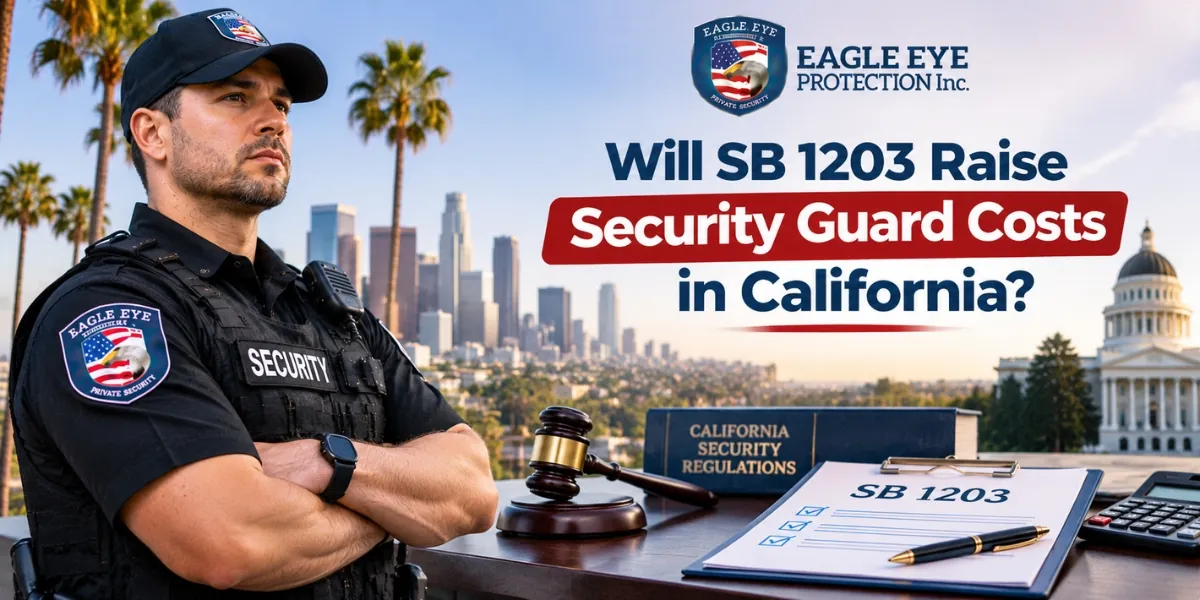
Many business owners in California are asking this question daily. Due to the SB 1203 security guard cost debate you will want to know exactly what is happening. This article will give you all the information you need to understand the law and what to expect in terms of price.
Senate Bill 1203 was a lengthy debate between California’s legislature, unions and employers. Unfortunately, there have been many headlines suggesting different things. This means that Hospitals, Retailers, Warehouses and Property Managers are unsure of what to do. We’ll show you what will change, what won’t be certain and how to budget.
Eagle Eye Pro has been providing security services to businesses in California since 2010. As a trusted security guard company we’ll explain everything in easy to understand terms. Our team will help you understand your options in an unbiased way. Read our article to find out what will happen and then get a free quote tailored to your site.
What is SB 1203?
SB 1203 is known as the Stand for Security Act. It includes key elements of training, compliance, reporting and employer costs. The bill was introduced by Senator Smallwood-Cuevas and supported by a few of California’s other legislators. It was passed by both houses of legislature in late August 2026 (with amendments). It was officially signed into law by Governor Gavin Newsom on 30th September 2026.
However, the main elements of training will not come into effect until 1st January 2029 meaning there is plenty of time for employers, security guards and training providers to prepare. During 2027 you should look at your contracts, staff and training. Some articles have mentioned 1st July 2028 but the final text shows 1st January 2029.
Costly Training Changes:
Security guards in California will need to complete 32 hours of training within their first 6 months working. However, SB 1203 means they now need to complete 42 hours of in-person classroom training. The power to arrest course is still a requirement to register as a security guard in California. They must now complete this course within six months of starting work. They must also complete 12 hours of annual review training.
They must complete at least 4 hours of hands-on de-escalation training per year. The training will also include bias, racial profiling and appropriate use of firearms. After the effective date they will no longer be able to complete training online. This may mean increased costs for security guards and employers with increased travelling, scheduling and training costs. Employers will need to ensure they have enough spaces for classroom training, instructors and cover.
Training Pay:
Employees must be paid for the training they are required to complete. They must also be paid for their annual refreshers. This ensures that security guards don’t have to pay for mandatory skills they need to perform their job. Employers will have increased payroll costs. Small businesses should calculate how much extra this will cost per guard, shift and renewal.
Fines:
The fines for failing to complete training and keeping records have increased. The director citation fine has increased to $10,000 from $2,500. Private Patrol Operator fines have increased to $1,000 from $500. Proprietary Employer fines for failing to complete training have increased to $1,000. Ensuring you keep accurate records, attendance and training certificates is now very important.
The law now means more reports must be made after incidents involving firing of firearms and physical altercation with security staff. The reports must include race, gender and training completion. BSIS must publish an annual report based on these incidents.
The $2 Billion Cost:
CALSAGA estimates that security clients will have an extra $2 Billion per year in costs. This is not a neutral study by the Government but from industry lobbying. Companies have told reporters they could see an increase of at least $1 Billion. CALSAGA estimated training requirements could cost over $350 Million per year. Overall however you will definitely see increased costs in training, pay, administration and compliance.
The current BSIS renewal cost is $44. However, CALSAGA claims it could increase to over $350. This has been mentioned but the final text doesn’t mention how much it will cost. New cards cost between $200-$360. This includes training costs. The $60 fee, background checks, Live Scan and training costs are included.
Current Rates in California:
The SB 1203 security guard cost will depend on what you currently pay. Unarmed guards cost between $25-$40 per hour from a licensed provider. Armed guards cost between $40-$100 per hour depending on permits and risk. Event security costs between $35-$75 per hour. Mobile patrol costs between $25-$65 per visit.
If you require 24hr coverage you will see a reduced hourly rate. This is due to the costs being split across the week. One post could cost $8,400 per month (before overtime). The hourly rate includes costs for training, instructor fees, insurance and compliance. An increase in hourly rate will therefore compound across shifts, weeks and months.
If the hourly rate increases by $2 you could be looking at paying an extra $480 per month for one 8 hour post. If it increases by $5 you could be paying an extra $1,200 per month. If you’re requiring full 24/7 coverage you’ll see a bigger impact. 3 shifts will need full time staff. Many sites also require security during nights, weekends, holidays and in emergency situations.
Small businesses will struggle as security is vital but they may not have much in their budget. However, reducing coverage can lead to increased theft, vandalism, liability and safety risks. CALSAGA says around 90% of businesses using security guards are small businesses. Every sector will need a bespoke solution.
Will Costs Increase for Everyone?
Many clients in California will see an increase in the SB 1203 security guard cost. We know training will increase but we aren’t sure about pay and fees. Previous drafts mentioned the Industrial Welfare Commission would set pay for security guards. However, this commission has been inactive since 2004 and although there have been proposals to bring it back in power, the enrolled digest doesn’t mention pay. It focuses on training, pay, reporting and fines.
Don’t assume the early mentions of pay will be in place. You should prepare for increased pressure on pay. With increased training you would expect to see increased pay. However, there could be delays in hiring due to limited classroom spaces and background checks. CALSAGA warn that outsourcing training could cause delays in employing over 300,000 security roles. Rural security guards may also have increased costs due to needing to travel further.
Advocates say improved training will improve de-escalation, safety, decision making and confidence in security guards. Annual de-escalation training may reduce disputes, injuries, claims and incidents. Improved training may also mean security guards stay longer reducing turnover, hiring and onboarding costs. Whilst you will see increased costs from training you will see improved value.
How to Budget
Make a list of everything, including posts, shifts, locations, risk levels & renewal dates. Consider your options; unarmed, armed, mobile & monitoring. Sometimes hybrid options work well. You can have guards at key points and cameras in lower risk areas. Be cautious of vague contracts that may include extra costs such as training, admin and higher costs. Ask your providers how they will cover 42 hours. Keep a log so it is easy when auditing and renewing.
Why Choose Eagle Eye Pro?
Eagle Eye Pro are a licensed security company in Los Angeles (PPO 17233). We provide security services with our BSIS certified guards since 2010 to protect your home, business or event throughout the state. We provide security services for offices, retail, warehouses, construction, healthcare and events. We provide static security, mobile patrols, armed security and fire watching. Our guards can provide access control, CCTV monitoring, patrolling, incident management and visitor management.
All our security services start with a free consultation and bespoke quote. Call us on 213-221-9005 to discuss your requirements, including your site, shifts, risk and budget. We have experience to not over hire but keep people and property safe. Choose a company who can show you their licence, insurance, training and management plan. Don’t go for a cheap quote without management as it could cost you more. We provide local knowledge, licensed guards and reactive management.
FAQs
What will be the additional cost to most businesses as a result of SB 1203?
The SB 1203 security guard cost will vary depending on how many hours, location and type of guard.
When will it come into affect for security guards in California?
The changes to training will take effect from 1st January 2029. The preparation period should be done in 2027 and 2028.
Will online security guard training be taken away altogether?
The 42 hours of core training is to be completed in traditional classroom training. Please note that online/hybrid training may be available and check BSIS guidelines.
Will employers be required to pay for training of guards?
Yes, employers are obliged to provide training that is required and pay employees. This also extends to refreshers each year.
Conclusion
Owners should budget for this ahead of time and check out different providers to make sure that you are only paying for what you need. You will have extra training hours, extra pay and will need to keep records. We can help you to look through your plan. Give us a call on 213-221-9005 to have a free consultation and quote. We can also provide same day services for urgent positions, events and construction sites. To find out more about our services, receive a quote and secure your property today visit eagleeyepro.com.